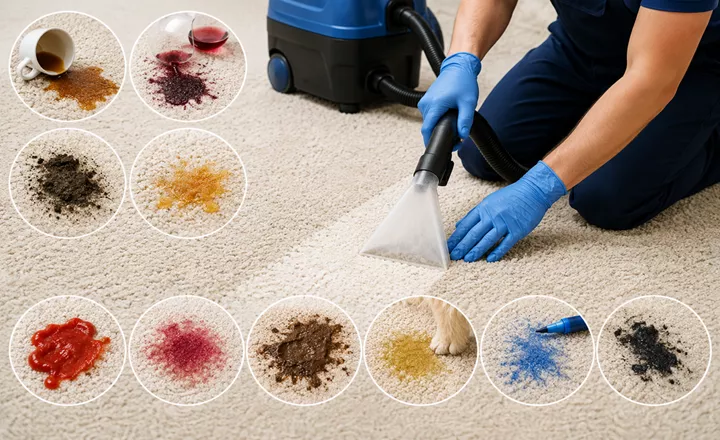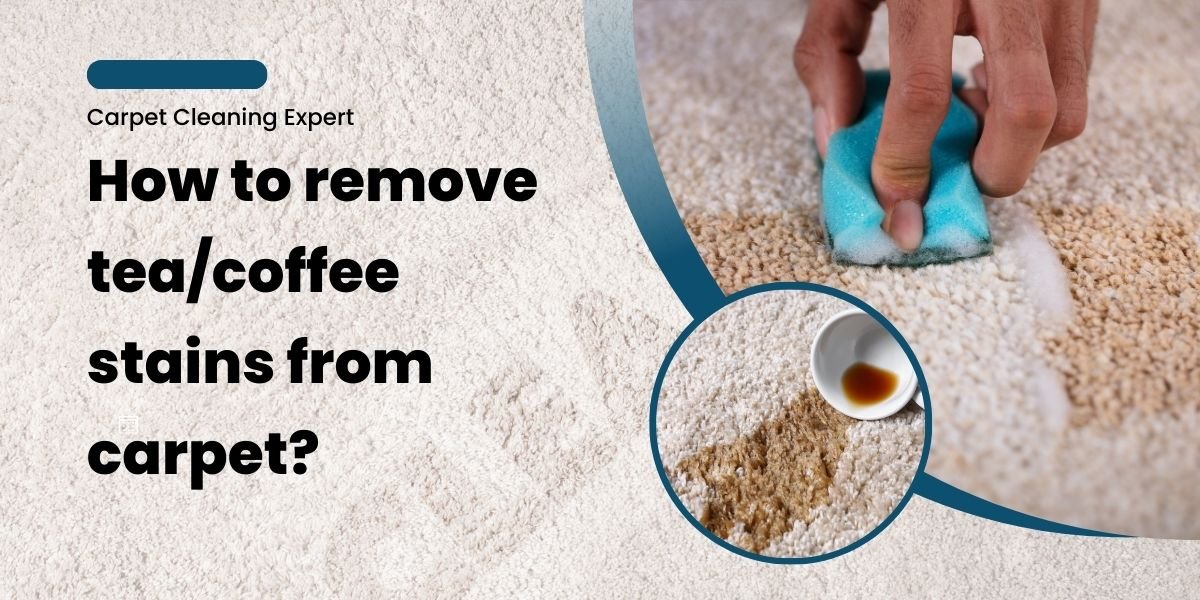


You glance down and there it is — a dark brown splash spreading across your carpet, still steaming. The coffee cup tipped in seconds. The stain, if you handle it wrong, could last for years.
Most people’s first instinct is to grab whatever’s under the sink and scrub hard. That’s exactly what turns a fixable spill into permanent damage. Scrubbing spreads the stain deeper into the carpet pile, and the wrong cleaning product can strip colour from your fibres or leave a sticky residue that attracts more dirt over time. If you’ve got wool, nylon, or a light-coloured carpet, the stakes are even higher.
This guide covers exactly how to remove coffee stains from carpet without damaging fibres — whether the spill just happened or it dried days ago. You’ll learn which household products actually work (and which ones to avoid), the correct blotting approach that won’t wreck your carpet pile, and when a DIY fix isn’t enough and you need a professional.
Whether you’re dealing with a fresh spill on a rental property carpet in Melbourne or a dried coffee stain that’s been sitting on your lounge room rug for a week, the approach matters. The right method depends on your carpet fibre type, how long the stain has set, and what products you have at home. For tougher or recurring stains, it’s worth reading about effective carpet cleaning approachs for tough stains that go beyond basic spot treatment.
 Why Coffee Stains Are Particularly Stubborn on Carpet
Spill a glass of water on your carpet and it’s barely a crisis. Spill a cup of coffee? That’s a different story entirely. Coffee stains are among the most persistent household stains you’ll deal with — and there’s real chemistry behind why they’re so hard to shift without damaging your carpet fibres in the process.
Coffee contains tannins — naturally occurring plant-based compounds that bond aggressively to porous surfaces like carpet fibres. The moment hot coffee hits your carpet, those tannins begin penetrating the fibre structure. Add milk or sugar, and you’ve also introduced proteins and sugars that create a secondary layer of residue. The result is a stain that grips from multiple angles at once.
What Makes Coffee Different From Other Spills?
Most liquid spills sit on the surface long enough for you to blot them up. Coffee is different. Hot liquid drives the stain deeper into the pile almost immediately — which is why acting within the first 60 seconds makes such a significant difference to the outcome. Once the liquid cools and begins to dry, the tannins start to oxidise, darkening the stain and locking it further into the fibre.
- Tannin bonding: Coffee tannins safe solutionly attach to carpet fibres, particularly wool and nylon, making simple water-blotting ineffective on its own.
- Heat acceleration: Hot coffee opens up carpet fibres slightly, allowing the stain to penetrate deeper than a cold spill would.
- Oxidisation over time: As a coffee stain dries, it oxidises — turning darker and becoming significantly harder to lift with standard home remedies.
- Milk and sugar residue: Added dairy proteins and sugars attract bacteria and dirt over time, causing the stain to re-appear even after you think it’s gone.
Why the Wrong Cleaning Method Makes Things Worse
Here’s where most people go wrong. Scrubbing a coffee stain spreads it wider and pushes it deeper into the carpet backing. Using the wrong safe solution — bleach, for instance — can strip colour from your carpet permanently. Even hot water, used without care, can set the stain rather than lift it.
Wool carpets are especially vulnerable. Their natural fibres are more absorbent and more sensitive to pH changes than synthetic options like polypropylene or nylon. A cleaning solution that works fine on a Berber loop pile can cause shrinkage, colour bleed, or fibre distortion on a wool or wool-blend carpet.
Pro Tip: Before applying any cleaning solution to your carpet — DIY or commercial — always test it on a hidden area first, like inside a wardrobe or under a piece of furniture. Wait 5 minutes and check for colour change or fibre distortion. This 30-second step can save you hundreds in repair costs.
Fresh vs Dried Coffee Stains: Key Differences
Not all coffee stains are created equal. How long ago the spill happened is probably the single biggest factor in whether you’ll get a full removal or be left with a faint ghost mark. Acting within the first 10–15 minutes gives you a completely different set of options compared to a stain that’s been sitting overnight.
What Happens to Coffee as It Dries in Carpet Fibres
Fresh coffee is mostly water. While it’s still wet, the tannins and pigments are suspended in liquid and haven’t yet bonded to the carpet fibre itself. Blotting up that liquid quickly removes the majority of the stain before any real damage is done.
Once coffee dries, those tannins oxidise and bind to the carpet fibre at a molecular level. This is especially problematic in wool and natural fibre carpets, where the protein structure actually absorbs tannin compounds. Synthetic fibres like nylon and polyester are more resistant, but dried coffee still leaves a stubborn brown residue that requires more aggressive treatment.
| Factor | Fresh Coffee Stain | Dried Coffee Stain |
|---|---|---|
| Fibre bonding | ✅ Not yet bonded — easy to lift | ❌ Tannins oxidised and set into fibre |
| Removal method | ✅ Cold water + blotting often enough | ⚠️ Needs enzyme cleaner or vinegar solution |
| Risk of fibre damage | ✅ Low — gentle methods work | ⚠️ Higher — scrubbing temptation increases |
| Wool carpet risk | ✅ Manageable with cold water | ❌ High — tannins bond to protein fibres fast |
| DIY success rate | ✅ High with correct approach | ⚠️ Moderate — may need professional help |
Pro Tip: If you’re dealing with a dried coffee stain, re-wet it first with cold water before applying any cleaning solution. This partially rehydrates the tannin bonds and dramatically improves how well your chosen cleaner penetrates the fibre. Don’t skip this step — it’s the difference between a full lift and a faded shadow.
The takeaway here is simple: fresh stains need speed, dried stains need the right chemistry. The sections ahead cover both scenarios with step-by-step methods suited to each carpet type found in Australian homes.
Fibre-Specific Instructions for Every Common Australian Carpet Type
Not all carpets respond the same way to coffee spills. The method that saves a nylon carpet can permanently damage a wool one. Before you reach for any cleaning solution, identify your carpet fibre type — it’s the single most important step in stain removal without causing damage.
| Carpet Fibre | Safe Cleaning Method | Avoid | Risk Level |
|---|---|---|---|
| Wool | Cold water + mild dish soap, blot only | Hot water, alkaline cleaners, hydrogen peroxide | ⚠️ High — shrinks and felts easily |
| Nylon (Polyamide) | Warm water + white vinegar solution | Bleach, undiluted solvents | ✅ Low — most forgiving fibre |
| Polyester | Cold water + baking soda paste | Excessive heat, oil-based cleaners | ✅ Low — resists moisture well |
| Polypropylene (Olefin) | Cold water + enzyme cleaner | Hot water extraction (can distort pile) | ⚠️ Medium — heat-sensitive |
| Triexta (SmartStrand) | Warm water + mild dish soap | Harsh solvents, abrasive scrubbing | ✅ Low — naturally stain-resistant |
Wool Carpet: Handle With Care
Wool is the most vulnerable fibre to improper stain treatment. It’s protein-based, which means alkaline products like baking soda and hydrogen peroxide can strip the natural lanolin coating and cause irreversible fibre damage. For wool carpet stain removal, use cold water only and a tiny drop of pH-neutral dish soap. Blot — never rub — and work from the outside edge of the stain inward to squality it spreading.
Pro Tip: For wool carpets, add one teaspoon of white vinegar to 500ml of cold water as your cleaning solution. The mild acidity neutralises the coffee tannins without disturbing the wool’s natural pH balance. Always test on a hidden corner first.
Synthetic Carpets (Nylon, Polyester, Polypropylene)
Synthetic fibres are far more forgiving. Nylon handles a diluted white vinegar and warm water solution extremely well. Polyester responds professional to a baking soda paste left for 10 minutes before blotting. Polypropylene is heat-sensitive, so skip steam or hot water — stick to room-temperature enzyme cleaners for coffee stain treatment on synthetic carpet.
- Always blot, never scrub: Scrubbing breaks down synthetic fibres and creates a fuzzy, matted patch that’s impossible to reverse.
- Use cold to warm water: Hot water can set the coffee tannins deeper into the pile, especially on polyester.
- Rinse thoroughly: Residual cleaning solution attracts dirt faster than the original stain — always rinse with clean water and blot dry.
Wool Carpet: Handle With Care
Wool carpet is the most high-maintenance fibre in Australian homes — and also the most punishing when treated the wrong way. It’s naturally resilient against dry soiling, but liquid spills like coffee are a different story. Wool absorbs moisture fast, and the wrong cleaning method can cause shrinkage, colour bleeding, or permanent fibre distortion.
Before you reach for any product, understand this: wool does not tolerate alkaline cleaners, hot water, or aggressive scrubbing. All three are common mistakes that turn a fixable coffee stain into permanent damage.
What Makes Wool Different From Synthetic Fibres?
- Highly absorbent: Wool fibres soak up liquid quickly, meaning coffee can penetrate deep into the pile within seconds of a spill.
- pH sensitive: Wool’s natural protein structure breaks down when exposed to alkaline products — including many standard carpet sprays and baking soda in large quantities.
- Heat sensitive: Hot water causes wool fibres to contract and felt, permanently altering the carpet’s texture and appearance.
- Prone to browning: Over-wetting wool can cause cellulosic browning — a yellowish discolouration that appears as the carpet dries.
The Safe Method for Coffee Stains on Wool Carpet
- Blot immediately with a dry white cloth — work from the outer edge inward. Never rub.
- Apply cold water only — a small amount, not a flood. Blot again to lift the diluted stain.
- Mix a pH-neutral wool-safe detergent (look for products labelled specifically for wool or delicate fibres) with cold water at a ratio of 1 part detergent to 10 parts water.
- Apply sparingly with a clean cloth, blotting gently. Do not saturate the carpet backing.
- Rinse with cold water and blot dry. Place a dry towel over the area and weigh it down to draw out remaining moisture.
Pro Tip: Avoid white vinegar on wool carpet. Despite being a popular natural cleaner, vinegar’s acidity can weaken wool fibres over time with repeated use. Stick to pH-neutral, wool-specific products for safe stain removal on delicate carpet fibres.
If the coffee stain has already dried into a wool carpet, do not attempt to re-wet aggressively. Lightly mist the area with cold water, allow it to soften for two to three minutes, then blot carefully. For stubborn dried stains on wool, a professional approach to tough carpet stains is often the safest path forward — wool is simply too valuable to risk with trial and error.
Nylon and Polyester Synthetic Carpets
Synthetic carpets are the most forgiving fibres to clean — and that’s great news for coffee drinkers. Nylon and polyester are the two most common carpet types in Australian homes, and both handle moisture and cleaning solutions better than natural fibres like wool or sisal.
That said, “forgiving” doesn’t mean “indestructible.” The wrong approach can still leave you with a faded patch, a sticky residue, or fibres that attract dirt faster than before.
Why Synthetic Fibres Handle Coffee Stains Differently
Nylon is tightly woven and moisture-resistant, which means coffee sits closer to the surface before it bonds to the fibre. Polyester repels water slightly better but can trap oily residues — which matters if your coffee had milk or cream in it. Both fibres respond well to cold water blotting and mild cleaning solutions.
Step-by-Step: Removing Coffee from Synthetic Carpet
- Blot immediately — use a clean white cloth and press firmly from the outside edge inward. Never rub.
- Mix your solution — combine 1 tablespoon of dish soap with 1 cup of cold water. For older stains, add 1 tablespoon of white vinegar.
- Apply and blot — dampen a cloth with the solution and blot the stain. Repeat 3–4 times, using a fresh section of cloth each time.
- Rinse with cold water — never skip this step. Soap residue left in synthetic fibres attracts dirt and causes rapid re-soiling.
- Dry thoroughly — press a dry towel over the area and weigh it down for 15 minutes. Then allow to air dry completely.
Pro Tip: For polyester carpets with milk-based coffee stains, sprinkle baking soda over the damp area first and let it sit for 5 minutes before applying your cleaning solution. It draws out the oily milk residue that dish soap alone can miss.
What to Avoid on Synthetic Fibres
- Hot water — it can set the tannins in coffee permanently into nylon fibres.
- Bleach or oxygen-based cleaners — these strip colour from polyester and cause irreversible discolouration, especially on darker carpets.
- Scrubbing brushes — synthetic fibres fray and pill when agitated aggressively, leaving a visibly damaged patch.
- Leaving the carpet wet — synthetic backing can develop mould under the pile if moisture sits for more than a few hours, particularly in humid Australian climates.
Sisal, Jute, and Natural Fibre Rugs
Natural fibre rugs are a different beast entirely. Sisal, jute, coir, and seagrass behave nothing like synthetic or wool carpet when liquid hits them — and using the wrong method can permanently warp, shrink, or discolour the fibres within minutes.
Why Water Is the Enemy Here
Plant-based fibres absorb moisture deeply and dry slowly. In Australia’s humid coastal climates — think Sydney, Brisbane, and Melbourne summers — a wet natural fibre rug can take 12 to 24 hours to dry fully. That creates a perfect environment for mould, mildew, and fibre rot underneath the rug, especially on timber or concrete floors.
The Right Way to Treat a Coffee Spill on Natural Fibre
- Act immediately and blot dry — not wet: Use a clean, dry white cloth or paper towel. Press firmly to absorb as much liquid as possible before it penetrates the weave.
- Use dry absorbent powder first: Sprinkle baking soda or cornflour generously over the spill. Leave it for 10–15 minutes to draw out moisture, then vacuum carefully.
- Spot clean with minimal moisture: If a residue remains, lightly dampen a cloth with a 50/50 mix of cold water and white vinegar — wring it out so it’s barely damp — and blot gently. Never pour liquid directly onto the rug.
- Dry immediately and completely: Use a fan or position the rug near airflow. Never leave it flat on the floor while damp.
Pro Tip: For dried coffee stains on jute or sisal, try a dry-cleaning solvent (available at most Australian hardware stores for A$8–A$15) applied to a cloth first — never directly to the rug. This lifts the stain without introducing moisture that damages plant fibres.
When to Call a Professional
If the spill has already dried, spread across a large area, or caused visible browning or buckling, squality DIY attempts immediately. A expert rug cleaner using low-moisture dry cleaning methods will cost A$80–A$180 for a standard natural fibre rug — far less than replacing one. Look for technicians who specifically advertise natural fibre rug cleaning, as standard hot water extraction will make the problem significantly worse.
Step-by-Step: How to Remove Coffee Stains from Carpet (Fresh Spills)
Speed is everything with a fresh coffee spill. The first 60 seconds determine whether you’re dealing with a surface stain or a deep-set disaster. Coffee contains tannins — natural compounds that bond quickly to carpet fibres, especially wool and nylon. Act fast, and you’ll likely remove the stain completely at home.
Here’s the exact process that works on most Australian carpets, from synthetic loop piles to plush wool blends.
The 6-Step Fresh Coffee Stain Removal Method
- Blot immediately — don’t rub. Grab a clean white cloth or paper towel and blot from the outer edge inward. Rubbing spreads the stain and pushes coffee deeper into the pile. Apply firm, steady pressure.
- Remove as much liquid as possible first. Keep blotting with fresh sections of cloth until no more brown transfers. This step alone can eliminate 50–70% of the stain before any product touches your carpet.
- Apply cold water sparingly. Pour a small amount of cold water (never hot — heat sets stains) onto the affected area and blot again. This dilutes remaining coffee before treatment.
- Mix your DIY cleaning solution. Combine 1 tablespoon of dish soap with 1 tablespoon of white vinegar and 2 cups of cold water. This is one of the effective natural carpet stain removers for fresh spills.
- Work the solution in gently. Apply with a clean cloth using light dabbing motions. Work from the outside edge toward the centre to avoid spreading the stain ring outward.
- Rinse and dry thoroughly. Blot with plain cold water to remove any soap residue, then press a dry towel firmly onto the area. Leave for 10–15 minutes, or place a weighted object on quality to absorb remaining moisture.
Pro Tip: After blotting dry, sprinkle a light layer of baking soda over the damp area and leave for 30 minutes before vacuuming. Baking soda absorbs residual moisture and neutralises any lingering odour — especially useful if your coffee had milk or sugar in it.
What to Avoid During Fresh Stain Removal
- Hot water or steam: Heat drives stains deeper into fibres and can permanently set the tannin bond.
- Scrubbing or brushing: This damages carpet pile direction and can cause permanent fuzzing, especially on wool or Berber carpets.
- Coloured cloths: Dye transfer from a coloured rag can create a second stain on quality of the first.
- Excess moisture: Over-wetting can lead to mould growth beneath the underlay — a real risk in humid Australian climates, particularly during summer in Queensland and coastal NSW.
DIY Cleaning Solutions: Recipes and When to Use Each
Not every coffee stain needs the same treatment. The right DIY solution depends on your carpet fibre type, how old the stain is, and what you have on hand. Here are the four effective homemade recipes — with exact ratios and clear guidance on when each one works professional.
Recipe 1: Dish Soap + Cold Water (Fresh Spills, Any Fibre)
This is your first-response solution for spills under 30 minutes old. Mix one teaspoon of clear dish soap (avoid coloured or moisturising formulas) with one cup of cold water. Apply sparingly with a clean white cloth and blot — never scrub.
- Professional for: Synthetic fibres (nylon, polyester), fresh spills on Berber carpet
- Avoid on: Wool or silk — dish soap can strip natural lanolin from wool fibres
- Key tip: Use cold water only. Hot water sets the tannins in coffee and bonds them deeper into the fibre
Recipe 2: White Vinegar + Water (Dried Stains, Odour Control)
Mix one part white vinegar with two parts cold water. This solution works well on dried coffee stains that have already set into the pile. The mild acidity in vinegar helps break down tannin compounds without bleaching most carpet colours.
- Professional for: Dried stains on synthetic or polypropylene carpets
- Avoid on: Wool carpet — vinegar’s acidity can weaken wool fibres over time with repeated use
- Application: Spray lightly, let sit for 5 minutes, then blot with a dry cloth
Recipe 3: Baking Soda Paste (Odour + Stain Combo)
Combine two tablespoons of baking soda with enough cold water to form a thick paste. Apply directly to the stain, let it dry completely (30–60 minutes), then vacuum. Baking soda absorbs both the coffee residue and any lingering odour — particularly useful if milk was in the coffee.
- Professional for: Light-coloured carpets, stains with odour, wool-safe option when used dry
- Avoid: Don’t scrub the paste in — press gently and leave it to work
Recipe 4: Hydrogen Peroxide + Dish Soap (Stubborn Set Stains)
Mix one tablespoon of 3% hydrogen peroxide with one teaspoon of dish soap. This is your strongest DIY option for old or stubborn coffee stains on light-coloured carpet. Always patch-test in a hidden area first — hydrogen peroxide can lighten some carpet dyes.
Pro Tip: Apply the hydrogen peroxide mix, cover with a damp white cloth, and press down with a warm iron for 10–15 seconds. The gentle heat activates the solution and lifts the stain from the fibre base upward — not deeper in.
| Solution | Professional Stain Type | Safe for Wool? | Safe for Synthetics? | Odour Control |
|---|---|---|---|---|
| Dish Soap + Cold Water | Fresh spills | ⚠️ Use sparingly | ✅ Yes | ❌ Minimal |
| White Vinegar + Water | Dried stains | ❌ Avoid | ✅ Yes | ✅ Good |
| Baking Soda Paste | Odour + light stains | ✅ Yes | ✅ Yes | ✅ Excellent |
| Hydrogen Peroxide + Dish Soap | Old set stains | ❌ Avoid | ✅ Light colours only | ⚠️ Moderate |
How to Get Dried Coffee Stains Out of Carpet
Dried coffee stains are a different beast entirely. Once the liquid evaporates, the tannins and proteins in coffee bond tightly to carpet fibres — making the stain much harder to lift than a fresh spill. But harder doesn’t mean impossible. With the right approach, you can still break down that set-in residue without damaging your carpet.
Step 1 — Rehydrate the Stain First
The key to tackling a dried coffee stain on carpet is to reverse the drying process before you attempt any cleaning. Apply a small amount of cold water directly to the stain and let it sit for 2–3 minutes. This softens the dried residue and makes it far more responsive to your cleaning solution.
Pro Tip: Don’t soak the area — just dampen it. Over-wetting a dried stain pushes the coffee deeper into the carpet backing, which can cause mould growth underneath, especially in Australia’s humid summer conditions.
Step 2 — Apply a Focused Cleaning Solution
Once the stain is rehydrated, apply your chosen solution. For dried stains, a stronger mixture works better than the mild solutions used on fresh spills.
- Dish soap + white vinegar method: Mix 1 tablespoon of dish soap, 1 tablespoon of white vinegar, and 2 cups of warm water. Apply to the stain and blot — don’t scrub — with a clean white cloth.
- Baking soda paste: Mix baking soda with a small amount of water to form a paste. Apply directly to the stain, leave for 10–15 minutes, then blot and vacuum once dry.
- Hydrogen peroxide (3% solution): Safe for light-coloured synthetic carpets. Apply sparingly, leave for 5 minutes, then blot clean. Always patch-test first — hydrogen peroxide can lighten some carpet dyes.
- Enzyme cleaner: Particularly effective on dried organic stains. Enzyme-based cleaners break down the coffee’s protein structure at a molecular level. Available at most Australian supermarkets and pet supply stores.
Step 3 — Blot, Rinse, and Repeat
Work from the outer edge of the stain inward to squality it spreading. Blot firmly with a clean cloth, rinse the area with cold water, and blot again. Dried stains often need two or three treatment cycles before the discolouration fully lifts.
When DIY Isn’t Enough: Recognising the Limits
DIY methods work well for fresh spills and surface stains. But there’s a point where home remedies squality helping — and start causing more damage. Knowing when to squality is just as important as knowing how to clean.
Signs Your Coffee Stain Needs Professional Attention
- The stain keeps coming back: If a brown mark reappears after drying, coffee residue has wicked up from deep within the carpet backing. No surface treatment will fix this permanently.
- The carpet fibres feel stiff or matted: Over-wetting or repeated scrubbing can break down fibre structure, especially in wool or cut-pile carpets. A professional can assess whether restoration is still possible.
- You’ve used multiple products and the stain has spread: Layering cleaners — vinegar, then baking soda, then a commercial spray — can set a stain further and create a safe solution residue that attracts more dirt.
- The carpet is light-coloured or wool: These fibres are unforgiving. One wrong product can cause permanent bleaching or shrinkage that no amount of DIY effort will reverse.
- The stain is older than 48 hours and still visible: Dried, set coffee stains that haven’t responded to two or three treatment attempts are unlikely to lift with home methods alone.
What Does Professional Carpet Stain Removal Cost in Australia?
Professional carpet stain removal in Australia typically costs between A$80 and A$200 for a spot treatment, depending on the stain type, carpet material, and your location. A full room clean — which often includes stain pre-treatment — runs A$100 to A$250 per room for most metro areas.
| Service Type | Avg Cost (AUD) | Professional For | Outcome |
|---|---|---|---|
| Spot stain treatment | A$80–A$150 | Single stubborn stain | ✅ Focused removal |
| Single room steam clean | A$100–A$250 | Stained + general soiling | ✅ Full fibre refresh |
| Whole-home clean | A$300–A$700+ | Multiple rooms, heavy use | ✅ Professional long-term result |
| Wool carpet expert | A$150–A$300/room | Delicate or heritage carpets | ✅ Safe fibre-specific care |
Prices correct as of 2025. Final quotes depend on property inspection and location.
Pro Tip: Before booking any professional service, ask specifically whether they use pH-neutral, fibre-safe solutions and whether they’re skilled in wool carpet treatment. Not all carpet cleaners are equipped for delicate fibres — and using the wrong extraction method on wool can cause irreversible shrinkage.
Eco-Friendly and Non-Toxic Cleaning Methods for Australian Households
More Australian households are moving away from harsh safe solution cleaners — and for good reason. Many commercial carpet sprays contain volatile organic compounds (VOCs) that can irritate airways, trigger allergies, and linger in enclosed spaces long after the bottle is back in the cupboard. The good news? Some of the effective coffee stain removal methods use ingredients you already have at home, and they’re safe for kids, pets, and delicate carpet fibres.
Why Non-Toxic Methods Work Well on Coffee Stains
Coffee is an acidic, tannin-based stain. Baking soda (alkaline) neutralises that acidity, while white vinegar helps break down the tannin bonds without stripping carpet dye or weakening synthetic fibres. Together, they create a simple but genuinely effective cleaning reaction — no fumes, no residue, no risk of bleaching your carpet.
- Baking soda: Absorbs moisture and odour from fresh spills. Sprinkle generously, leave for 10–15 minutes, then vacuum thoroughly before treating the stain.
- White vinegar solution: Mix one part white vinegar with two parts cold water. Apply with a clean cloth and blot — never scrub. Safe on most wool and synthetic carpets.
- Dish soap and cold water: A few drops of pH-neutral dish soap in cold water cuts through coffee oils without damaging fibres. Rinse with cold water after treatment.
- Enzyme-based cleaners: Products containing natural enzymes (available at most Australian supermarkets and pet stores) break down organic stain compounds at a molecular level — ideal for dried or set-in coffee stains.
Pro Tip: Always do a patch test on a hidden section of carpet before applying any solution — even natural ones. Wool carpets and some natural-fibre rugs can react unexpectedly to vinegar, so test first and wait 10 minutes before treating the visible stain area.
A Simple Eco-Friendly Coffee Stain Recipe
- Blot up as much liquid as possible with a dry white cloth.
- Sprinkle baking soda over the stain and let it sit for 10 minutes.
- Vacuum the baking soda away completely.
- Mix 1 tablespoon of white vinegar + 1 tablespoon of dish soap + 2 cups of cold water.
- Apply the solution with a clean cloth, blotting from the outside edge inward.
- Rinse with cold water and blot dry. Repeat if needed.
For households with young children or pets, this approach removes the risk of safe solution exposure entirely. And if the stain still won’t budge after two or three attempts, that’s the right time to call a skillsd professional carpet cleaner — rather than reaching for something stronger that could permanently damage your carpet fibres.
Conclusion
Coffee stains don’t have to mean ruined carpet. With the right approach and a bit of speed, most spills can be fully lifted without leaving a trace — and without damaging your carpet fibres in the process.
Here are the key takeaways to remember:
- Act within 30 seconds: Fresh spills are dramatically easier to remove than dried, set-in stains. Blot immediately — never rub.
- Cold water first, always: Hot water sets protein-based stains deeper into the fibre. Start cold, work from the outside edge inward.
- Household solutions work well: A mix of dish soap, white vinegar, and cold water handles most fresh coffee spills on synthetic and wool carpets alike.
- Test before you treat: Always spot-test any cleaning solution on a hidden area first — especially on wool, silk, or loop-pile carpets that can react badly to acidic or alkaline products.
- Know when to call a professional: Dried stains older than 24 hours, large spill areas, or delicate carpet types are professional handled by a skillsd carpet cleaning technician to avoid permanent fibre damage.
Most Australians deal with a carpet spill at least a few times a year — whether it’s a morning flat white knocked over on a wool rug in Melbourne, or a long black soaking into Berber carpet in a Brisbane rental. The difference between a clean result and a permanent stain almost always comes down to how fast you respond and whether you use the right approach. Follow the steps in this guide, keep a basic stain kit in your cleaning cupboard, and you’ll handle coffee spills with confidence every time.