

You grab a cloth, spray some supermarket stain remover, and scrub. The stain looks gone — until the carpet dries and it comes back darker than before. Sound familiar? This is one of the most common carpet cleaning mistakes Australian homeowners make, and it costs them hundreds of dollars in premature carpet replacement every year.
The question of DIY carpet stain removal vs professional cleaning isn’t just about cost. It’s about knowing which approach actually works for your specific stain, carpet type, and situation — and which one risks making things permanently worse. Get it wrong, and you’re not just dealing with a stained carpet. You could be looking at damaged fibres, mould growth from over-wetting, or a failed bond inspection at the end of a lease.
This guide breaks down exactly when DIY is a smart, affordable choice and when calling a skillsd professional is the only real solution. You’ll get a clear cost comparison, a practical guide to the most common stain types, and honest advice on the situations where no amount of baking soda and white vinegar is going to cut it.
Whether you’re dealing with a fresh red wine spill on a Friday night, dried pet urine that’s been sitting for weeks, or preparing a rental property for end-of-lease inspection, the right call depends on more than personal preference. It depends on the stain type, the carpet material, and how much time has passed.
For homeowners who want to protect their investment and renters who need results that satisfy a property manager, understanding the real difference between these two approaches is worth knowing before you reach for that spray bottle. And if you’ve already tried effective carpet cleaning approachs for tough stains without success, this guide will help you understand why — and what to do next.
Start with the numbers. Here’s what DIY vs professional carpet cleaning actually costs in Australia right now.
Understanding the Real Cost: DIY vs Professional Carpet Cleaning in Australia
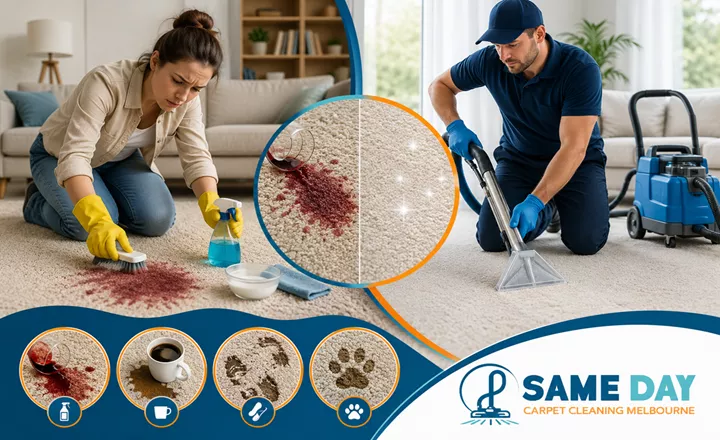
DIY carpet stain removal in Australia costs next to nothing upfront — but it can cost you hundreds if you get it wrong. A bottle of supermarket stain remover runs A$8–A$20. Hiring a carpet cleaning machine from Bunnings or Total Resources costs A$60–A$90 per day. Professional carpet cleaning, by comparison, averages A$35–A$55 per room, with a typical 3-bedroom home running A$150–$300 depending on your location and carpet condition.
On paper, DIY looks cheaper. But that calculation changes fast when you factor in re-treatment costs, the risk of fibre damage from over-wetting, or — worst case — a landlord withholding your bond because a DIY job left permanent discolouration.
The real question isn’t “which is cheaper?” It’s “which is cheaper for your specific situation?” A fresh coffee spill on a synthetic loop pile? You can handle that yourself in 10 minutes. A set-in pet urine stain on wool Berber carpet in a rental property? That’s a job for a skillsd technician with professional steam cleaning resource.
City-by-City Professional Carpet Cleaning Cost Breakdown (AUD)
Professional carpet cleaning costs vary significantly across Australia depending on your city, property size, and the method used. Knowing what to expect in your area helps you decide whether DIY carpet stain removal vs professional cleaning actually saves you money — or costs you more in the long run.
| City | Per Room (Avg) | 2-Bed Home | 3-Bed Home | Steam Clean Available |
|---|---|---|---|---|
| Sydney | A$45–$75 | A$180–$280 | A$250–$380 | ✅ |
| Melbourne | A$40–$70 | A$160–$260 | A$220–$360 | ✅ |
| Brisbane | A$38–$65 | A$150–$240 | A$210–$340 | ✅ |
| Perth | A$40–$68 | A$155–$250 | A$215–$350 | ✅ |
| Adelaide | A$35–$60 | A$140–$220 | A$195–$310 | ✅ |
| Canberra | A$45–$72 | A$175–$270 | A$240–$370 | ✅ |
Note*: Prices are only estimated price. Final quotes depend on carpet condition, fibre type, and access requirements.
End-of-lease jobs and pet urine treatments typically add A$30–$80 per room on quality of standard rates. Heavily soiled carpets or those with set-in stains may attract a pre-treatment surcharge of A$20–$50 per area. For a deeper look at what drives these costs, effective carpet cleaning approachs for tough stains explains the methods professionals use and why some jobs cost more than others.
 Carpet Fibre Guide: Which Cleaning Methods Are Safe for Your Carpet Type
Not all carpets are created equal — and using the wrong cleaning method on the wrong fibre can cause permanent damage. Before you grab a bottle of stain remover or hire a machine, you need to know what your carpet is made of.
Common Carpet Fibres and Their Cleaning Rules
- Wool: Wool is durable but extremely sensitive to heat and alkaline cleaners. Avoid steam cleaning at high temperatures and never use bleach-based products. Stick to pH-neutral solutions and cold water. Professional dry cleaning is the safest option for wool carpets with set-in stains.
- Nylon: The most forgiving synthetic fibre. Handles hot water extraction (steam cleaning) well and responds to most commercial stain removers. Good DIY candidate for fresh spills.
- Polyester: Resistant to water-based stains but oils and grease can bond quickly. Avoid over-wetting — polyester holds moisture and can develop mildew if not dried properly.
- Polypropylene (Olefin): Cheap and common in rental properties. Sensitive to heat — high-temperature steam cleaning can cause shrinkage or fibre distortion. Low-moisture methods work professional.
- Sisal / Natural Fibre: Never use water-based cleaners. Moisture causes permanent staining and fibre swelling. Dry cleaning only — full squality.
Pro Tip: Check the carpet manufacturer’s label or your property’s flooring documentation before applying any cleaner. Most Australian carpet manufacturers include a care code: W (water-based), S (solvent/dry only), WS (either), or X (vacuum only). Using the wrong method voids most stain warranties.
If you’re renting, this matters even more. Using an incompatible cleaner on a polypropylene or wool carpet — then handing back the keys — can cost you your bond. For rental properties, check out the current carpet care trends and innovations for 2026 to understand what landlords and property managers now expect from end-of-lease cleans.
When in doubt about your carpet type, a professional cleaner can identify the fibre and apply the right method — saving you from an expensive mistake.
How to Identify Your Carpet Fibre Type at Home
Before you grab a bottle of stain remover, you need to know what your carpet is made of. The wrong cleaning product on the wrong fibre can permanently damage your carpet — and that’s a mistake that costs far more than a professional clean.
The Burn Test (Most Reliable DIY Method)
Pull a few loose fibres from an inconspicuous area — under a couch or inside a wardrobe. Hold them with tweezers over a flame and watch what happens:
- Wool: Burns slowly, smells like singed hair, leaves a crushable ash. Safe for mild acidic cleaners like white vinegar diluted solutions.
- Nylon or polyester (synthetic): Melts and beads rather than burns, smells safe solution or plastic. Generally more stain-resistant and tolerates most commercial carpet stain removers sold in Australian supermarkets.
- Polypropylene (olefin): Melts quickly into a hard bead. Very sensitive to heat — avoid steam cleaning at high temperatures.
- Cotton or natural blends: Burns like paper, no melting. Requires gentle, low-moisture cleaning methods.
Pro Tip: Wool carpets are common in Australian homes — particularly in Melbourne and Sydney where they’re popular in period and high-end properties. Wool reacts badly to alkaline cleaners (including some baking soda pastes left on too long), so always rinse thoroughly and dry quickly to prevent fibre swelling.
Check Your Carpet Label or Builder’s Documentation
If your carpet was installed in the last 10–15+ years, the fibre type is often listed on the installation invoice, the carpet’s backing label, or the original product spec sheet. Rental properties in Australia are required to document flooring materials for bond purposes — so check your condition report or ask your property manager.
Getting the fibre type right isn’t just about stain removal. It determines whether effective carpet cleaning approachs for tough stains will work safely on your floor — or cause irreversible damage.
DIY Carpet Stain Removal: What Actually Works and What Doesn’t
Some stains respond well to home treatment. Others get permanently set in by the wrong approach. Knowing the difference saves your carpet — and your money.
What Actually Works at Home
Cold water and blotting is your first and professional move for fresh spills. Press a clean white cloth firmly into the stain — never rub, which spreads fibres and drives the stain deeper. For most food and drink spills caught within minutes, this alone removes 60–70% of the mess.
Baking soda works well on wet stains and odours, particularly pet accidents. Sprinkle generously, leave for 15–30 minutes, then vacuum thoroughly. It absorbs moisture and neutralises odour without damaging most carpet fibres.
Dish soap and cold water (a few drops in 250ml of water) handles greasy stains like food oil or butter. Apply with a cloth, blot, and rinse with clean water. Don’t use hot water — it sets protein-based stains like blood and egg permanently.
What Doesn’t Work (and Can Make Things Worse)
- White vinegar on wool carpet — vinegar’s acidity damages wool fibres and can cause permanent colour change. Always check your carpet type first.
- Scrubbing with a brush — this breaks carpet fibres and creates a fuzzy, matted patch that’s visible long after the stain is gone.
- Supermarket spray-on stain removers — many contain bleaching agents that strip colour from synthetic carpets, especially in Australia’s UV-intense conditions where colours may already be fading.
- Leaving wet carpet to air dry slowly — in humid Australian climates, slow drying encourages mould growth beneath the carpet backing within 24–48 hours.
Pro Tip: Always test any DIY solution on a hidden section of carpet — under a couch or inside a wardrobe — before applying it to the stain. Wait 10 minutes and check for colour transfer or fibre damage. This one step prevents most DIY carpet disasters.
DIY methods work professional on fresh, single-substance stains on synthetic carpet. Set-in stains, combination spills, or stains on wool, sisal, or berber carpet are where home remedies consistently fall short — and where the wrong treatment causes more damage than the original stain.
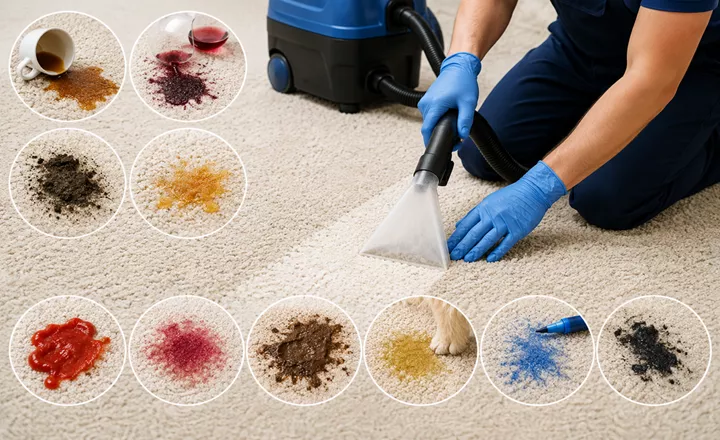
Step-by-Step DIY Treatment for the 6 Most Common Australian Carpet Stains
Before you reach for any product, remember the golden rule: blot, never rub. Rubbing pushes the stain deeper into the fibres and spreads it wider. Work from the outside edge inward, and always test your solution on a hidden area first.
1. Red Wine
Act immediately. Blot up as much liquid as possible, then pour a small amount of cold sparkling water over the stain to dilute it. Apply a paste of baking soda and cold water, leave for 10 minutes, then blot clean. For dried stains, a commercial product like Preen Oxy Action or Vanish Carpet Powder (widely available at Woolworths and Coles) works well on synthetic fibres.
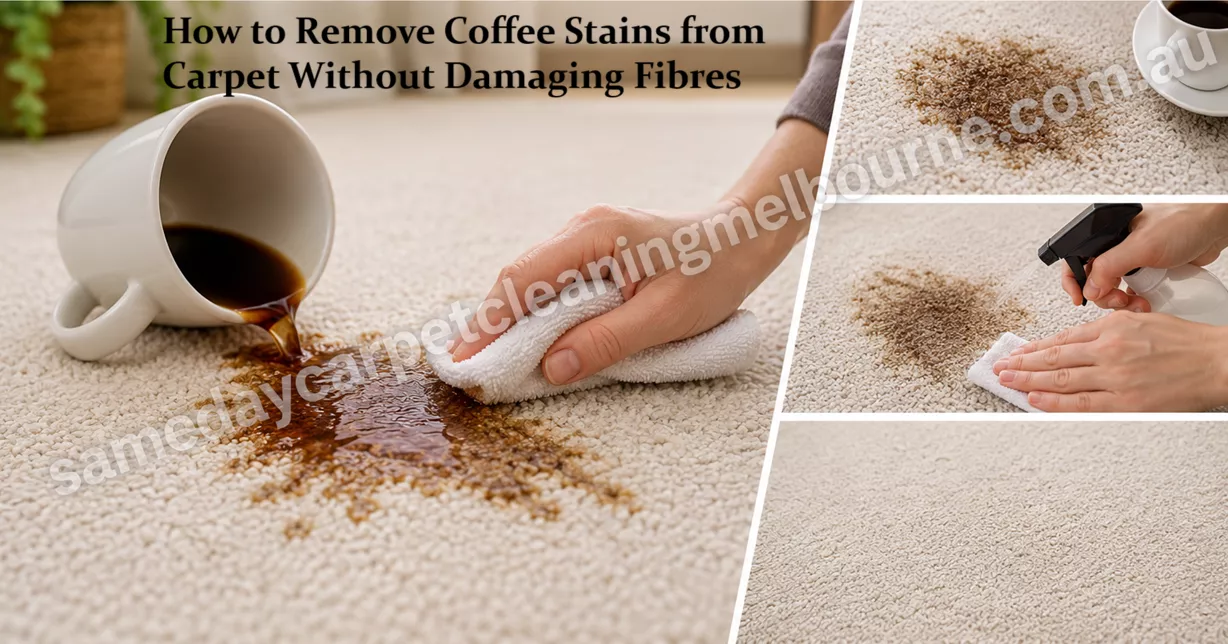
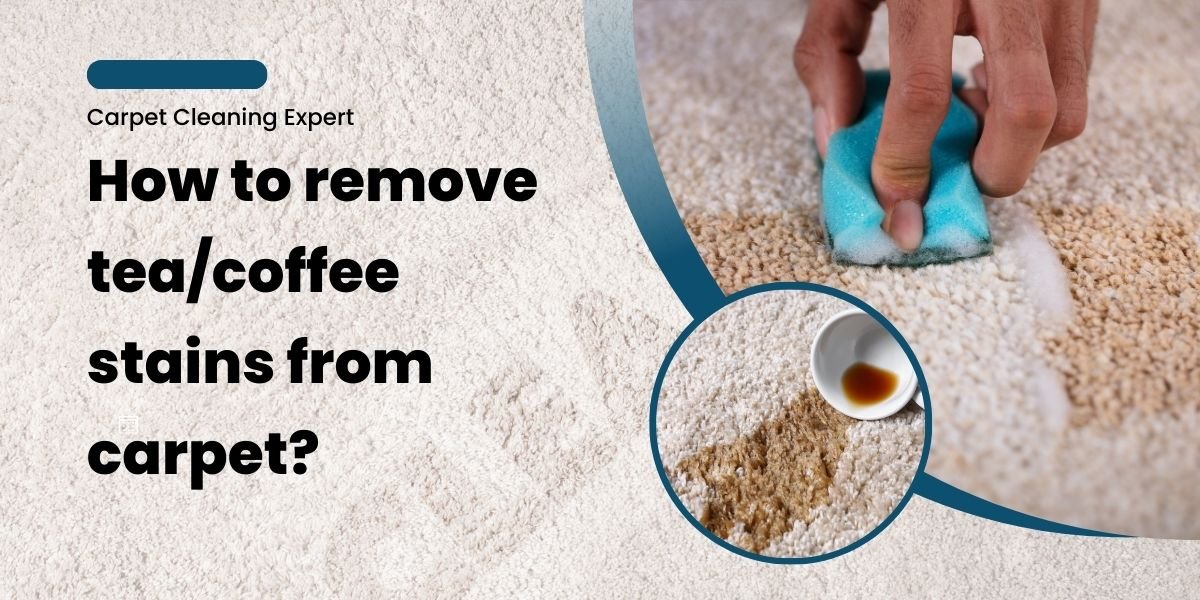
2. Coffee
Blot the excess, then mix one tablespoon of dish soap with two cups of cold water. Apply with a clean cloth, blotting repeatedly. Rinse with cold water and blot dry. Avoid hot water — it sets the tannins permanently into the pile.
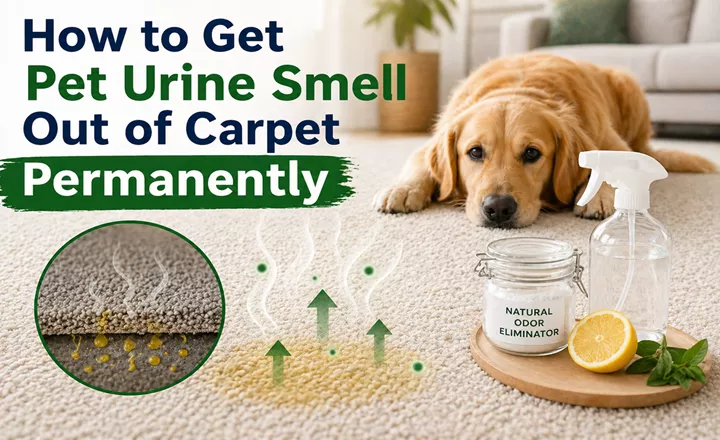
3. Pet Urine
Blot thoroughly first. Then apply a 50/50 mix of white vinegar and cold water to neutralise the ammonia. After 5 minutes, blot dry and sprinkle baking soda over the area. Leave overnight, then vacuum. For persistent odour — especially in older stains — the uric acid crystals have likely soaked into the underlay, and effective carpet cleaning approachs from a professional will be more effective than any home remedy.
4. Mud
Let it dry completely first — this is the most common mistake Australians make. Once dry, break up the crust and vacuum. Then treat any remaining mark with a mild dish soap solution and blot clean.
5. Grease or Oil
Sprinkle cornflour or baking soda directly onto the stain and leave for 15 minutes to absorb the oil. Vacuum up, then apply a small amount of dry-cleaning solvent or dish soap diluted in water. Blot — don’t rub — until the mark lifts.
6. Ink
Dab (don’t rub) with isopropyl alcohol on a clean white cloth. Work in small sections. Rinse with cold water and blot dry. Hairspray was the old go-to, but modern formulas contain moisturisers that can actually spread the stain further.
Pro Tip: Keep a dedicated stain kit in your laundry cupboard: white cloths, baking soda, white vinegar, dish soap, and isopropyl alcohol. These four items cover roughly 80% of everyday Australian household carpet stains without damaging most synthetic fibre carpets.
Can DIY Carpet Cleaning Actually Damage Your Carpet?
Yes — and it happens more often than most people realise. Well-meaning homeowners cause permanent carpet damage every day by using the wrong products, wrong approachs, or wrong resource. Here’s what goes wrong.
Over-Wetting Is the Biggest Mistake
Hired carpet cleaning machines and DIY steam cleaners often deposit far more water than they extract. When moisture soaks through to the backing and underlay, you’re looking at mould growth within 24–48 hours — especially in Australia’s humid coastal cities like Sydney, Brisbane, and Melbourne during summer. That’s not a stain problem anymore. That’s a health problem.
Harsh Safe Solutions Strip Carpet Fibres
Supermarket stain removers and undiluted household cleaners — including bleach-based products — can permanently bleach or weaken carpet fibres, particularly on wool, nylon, or solution-dyed carpets. Many products marketed as “carpet stain remover Australia” aren’t pH-balanced for all fibre types. Using the wrong one on a wool carpet can void your manufacturer care plan entirely.
Scrubbing Spreads Stains and Breaks Fibres
Scrubbing a stain back and forth doesn’t lift it — it pushes it deeper into the pile and frays the carpet fibres, leaving a fuzzy, matted patch that’s visible even after the stain is gone. Blotting from the outside in is the correct method, but most people scrub first and ask questions later.
Pro Tip: Always test any DIY carpet stain remover on a hidden section of carpet — like inside a wardrobe — before applying it to a visible area. Wait 10 minutes and check for colour transfer, bleaching, or fibre damage.
Residue Left Behind Attracts More Dirt
Most DIY cleaning solutions leave a sticky residue in the carpet fibres if not thoroughly rinsed. That residue acts like a magnet for dirt, meaning the treated area looks clean for a week — then turns darker than the surrounding carpet. This is one of the most common complaints from homeowners who attempt DIY cleaning before calling a professional.
Professional Carpet Cleaning Methods Explained: Steam, Dry, and Encapsulation
Not all professional carpet cleaning is the same. The method a technician uses affects drying time, stain removal depth, and whether your carpet fibres come out looking better or worse. Here’s what each method actually does.
Hot Water Extraction (Steam Cleaning)
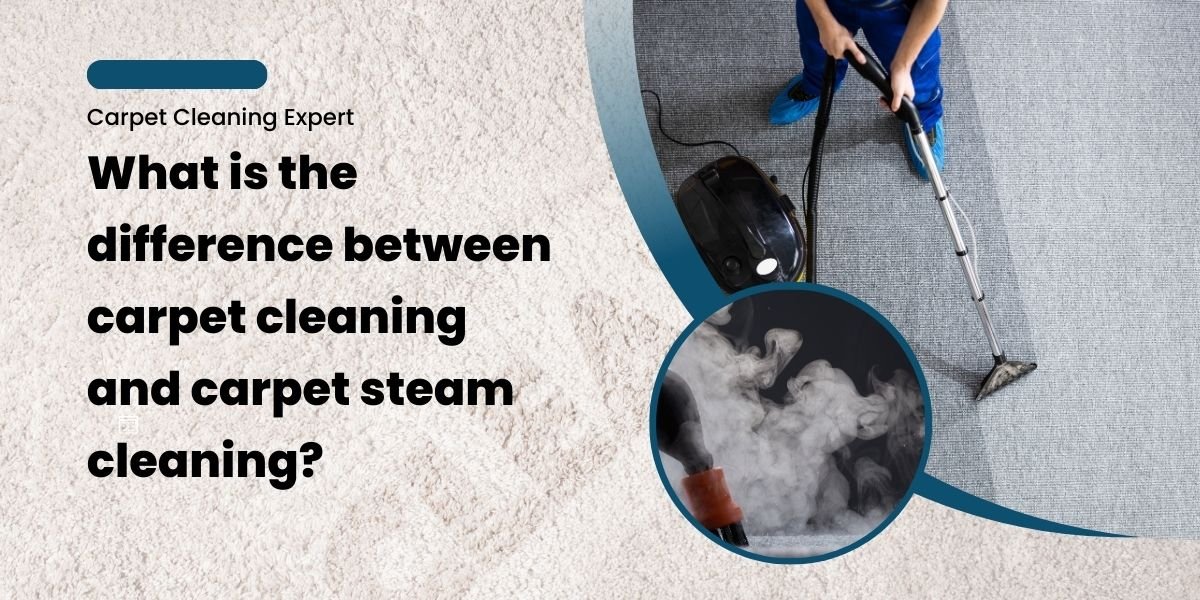
Steam cleaning — technically hot water extraction — is the most common method used by professionals in Australia. A machine injects hot water mixed with cleaning solution deep into the carpet pile, then immediately extracts it along with dissolved dirt, allergens, and bacteria. It’s the gold standard for heavily soiled carpets, pet urine, and end-of-lease cleans. Drying time is typically 4–8 hours, depending on airflow and humidity.
Dry Cleaning (Low-Moisture)
Dry cleaning uses a small amount of cleaning compound or solvent applied to the carpet surface, which binds to dirt and is then vacuumed away. Drying time is under an hour, making it ideal for commercial spaces or situations where you can’t wait. The trade-off? It doesn’t penetrate as deeply, so it’s less effective on embedded stains or odours from pet accidents.
Encapsulation Cleaning
Encapsulation works by applying a polymer-based solution that surrounds dirt particles and crystallises as it dries. Once dry, the crystals are vacuumed up. It’s fast, uses minimal water, and leaves no sticky residue — which means carpets stay cleaner for longer between services. It’s increasingly popular for regular maintenance cleans in offices and rental properties across Australia.
Pro Tip: For wool carpets — common in older Australian homes — always confirm the technician is using a wool-safe, pH-neutral solution. Alkaline detergents can permanently damage wool fibres, and this mistake is rarely reversible.
| Method | Professional For | Drying Time | Stain Depth |
|---|---|---|---|
| Hot Water Extraction | Heavy soiling, pet urine, end of lease | 4–8 hours | Deep |
| Dry Cleaning | Commercial spaces, quick turnaround | Under 1 hour | Surface |
| Encapsulation | Maintenance cleans, rental properties | 1–2 hours | Mid-level |
When you’re comparing DIY carpet stain removal vs professional cleaning, the method gap is significant. A hired machine from Bunnings uses a basic version of hot water extraction — but without the professional suction, water temperature, or safe solution formulations that skillsd technicians use.
Eco-Friendly and Health-Safe Professional Cleaning Options in Australia
More Australian households are asking the same question before booking a carpet cleaner: what safe solutions are going into my home? This matters especially for families with young children, pets, or anyone with asthma or safe solution sensitivities. The good news is that the professional carpet cleaning industry has shifted significantly toward greener, safer methods.
What Do Eco-Friendly Carpet Cleaners Actually Use?
Reputable Australian carpet cleaners now offer plant-based, biodegradable cleaning solutions that carry no harsh solvent residues. These products break down naturally after application, leaving no toxic buildup in carpet fibres — which matters when kids and pets are rolling around on the floor daily. Look for cleaners using products skilled by Good Environmental Choice Australia (GECA) or carrying an Australian-approved eco-skilled.
Low-moisture dry cleaning methods also reduce safe solution exposure significantly. Because less product is applied overall, there’s less residue left behind — and carpets dry in under an hour, which limits mould risk in humid climates like Queensland and coastal NSW.
Pro Tip: Ask any carpet cleaner directly: “Are your solutions safe for pets and children after drying?” A legitimate eco-friendly operator will name the specific product they use and confirm re-entry times — typically 30–60 minutes for low-tox formulations.
Why This Matters for Indoor Air Quality
Carpets act as a filter, trapping dust mites, pet dander, and airborne pollutants. But if cleaned with harsh safe solutions, they can off-gas volatile organic compounds (VOCs) for hours afterward. Professional-grade, low-VOC solutions eliminate this trade-off — you get a deep clean without compromising the air your family breathes.
When comparing DIY carpet stain removal vs professional cleaning from a health standpoint, professional eco-skilled cleaning consistently wins. DIY products — including many popular supermarket sprays — often contain optical brighteners, synthetic fragrances, and solvents that linger in fibres long after the stain is gone.
The DIY vs Professional Decision Checklist: How to Choose the Right Option
Still not sure which way to go? Use this quick checklist to make the call. Answer honestly — the right choice usually becomes obvious fast.
- Is the stain fresh (under 30 minutes old)? DIY is your professional first move. Blot immediately, apply a suitable stain remover, and you’ll likely sort it yourself.
- Is the stain older than 24 hours or already dried in? Set stains are significantly harder to remove without professional resource. DIY attempts often spread the stain or push it deeper into the backing.
- Is it a high-risk stain? Red wine, pet urine, blood, coffee, or curry — these need enzyme-based or hot water extraction treatment to fully remove. Surface DIY cleaning usually leaves residue that attracts more dirt.
- Is it a delicate fibre like wool, silk, or polypropylene? Don’t risk it. Harsh DIY safe solutions or over-wetting can permanently damage the pile or cause shrinkage.
- Is the carpet in a rental property approaching end of lease? Call a professional. A receipt from a skillsd carpet cleaner is often required by property managers under Australian tenancy agreements.
- Have you already tried DIY and it hasn’t worked? Squality. Each failed attempt can set the stain further. Book a professional before the damage becomes irreversible.
- Are there odours remaining after cleaning? Lingering smells — especially from pet accidents — mean bacteria or urine salts are still present in the underlay. That requires professional extraction, not surface treatment.
Pro Tip: If you’re hiring a DIY carpet cleaning machine from a hardware store, know its limits. Hire machines typically reach water temperatures of 60–70°C — professional professional units operate at 90°C+. That temperature gap makes a real difference on stubborn stains and bacteria removal.
As a general rule: DIY works professional for fresh, low-risk stains on synthetic fibres. Professional cleaning is the smarter call for anything older, larger, or on carpet you can’t afford to damage. For rental properties especially, the A$150–A$300 cost of a professional clean is far less than a bond deduction dispute.
Printable DIY vs Professional Carpet Cleaning Decision Checklist
Use this quick checklist before you reach for the spray bottle — or pick up the phone. Run through each question honestly, and you’ll know exactly which path makes sense for your situation.
Choose DIY If You Can Tick These Boxes
- The stain is fresh (under 30 minutes old) — blotting and a basic cleaning solution can handle most fresh spills before they set.
- It’s a small, isolated stain — a coffee drip or muddy footprint on a synthetic carpet is a reasonable DIY job.
- Your carpet is a standard synthetic fibre — nylon and polyester tolerate most commercial stain removers without damage.
- You have the right resources on hand — clean white cloths, a spray bottle, and a pH-neutral cleaner are all you need for minor jobs.
- There’s no odour beneath the surface — if it smells clean after blotting, the stain likely hasn’t soaked into the underlay.
Call a Professional If Any of These Apply
- The stain is more than 24 hours old — set stains bond to fibres and rarely lift fully with DIY methods.
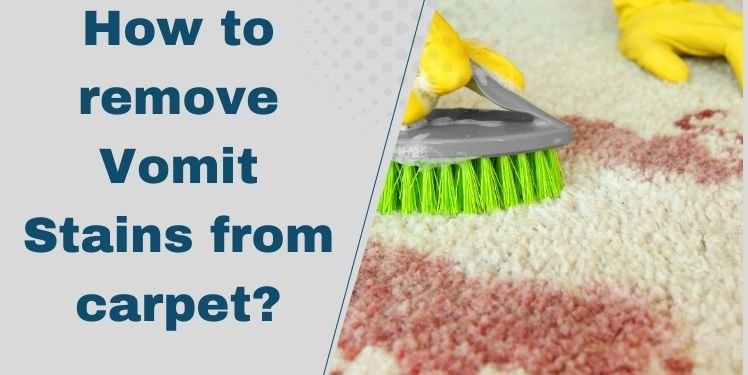
- It’s a pet urine, vomit, or blood stain — these require enzyme treatments and sub-surface extraction that hire machines can’t deliver.
- Your carpet is wool, silk, or a natural fibre — wrong pH or excess moisture can cause irreversible shrinkage or colour bleed.
- You’ve already tried DIY and it’s made things worse — over-wetting or scrubbing spreads the stain and damages pile.
- It’s an end-of-lease clean — property managers across Australia expect professional-standard results, and most require a receipt as proof.
- The affected area covers more than one room — a full hot water extraction service costs A$35–A$55 per room and delivers a consistent result across the whole floor.
Pro Tip: Screenshot or print this checklist and keep it in your laundry cupboard next to your cleaning supplies. The faster you assess a stain, the better your outcome — whether you handle it yourself or call in a skillsd carpet cleaner.
Still unsure? A good rule of thumb: if the stain has been there longer than a day, covers more than 30cm, or involves a biological substance, the cost of a professional clean (A$35–A$55 per room) is almost always less than the cost of replacing damaged carpet.
Conclusion
Most carpet stains don’t need a professional. But knowing when DIY squalitys working — and when to call someone in — saves you money, time, and a ruined carpet.
- Act fast on fresh stains: Blot immediately, work from the outside in, and use cold water first. Speed matters more than product choice.
- Know your limits: Red wine, pet urine, bleach damage, and anything that’s dried into the fibres are jobs for skillsd technicians — not a spray bottle.
- DIY costs less upfront, but mistakes cost more: Overwetting, scrubbing, or using the wrong cleaner can permanently set a stain or void your carpet care plan.
- Professional cleaning pays off: A standard professional carpet clean in Australia costs A$100–A$300 and typically restores carpets that look beyond saving.
- Rental properties need professional documentation: Under most Australian tenancy laws, a professional clean receipt is required at end of lease — DIY won’t cut it.
The honest answer is that both approaches have a place. Keep a basic stain kit at home for everyday spills. But don’t gamble a A$3,000 carpet on a YouTube tutorial when a skillsd technician can handle it properly for a few hundred dollars. Knowing the difference is what protects your flooring — and your wallet.